
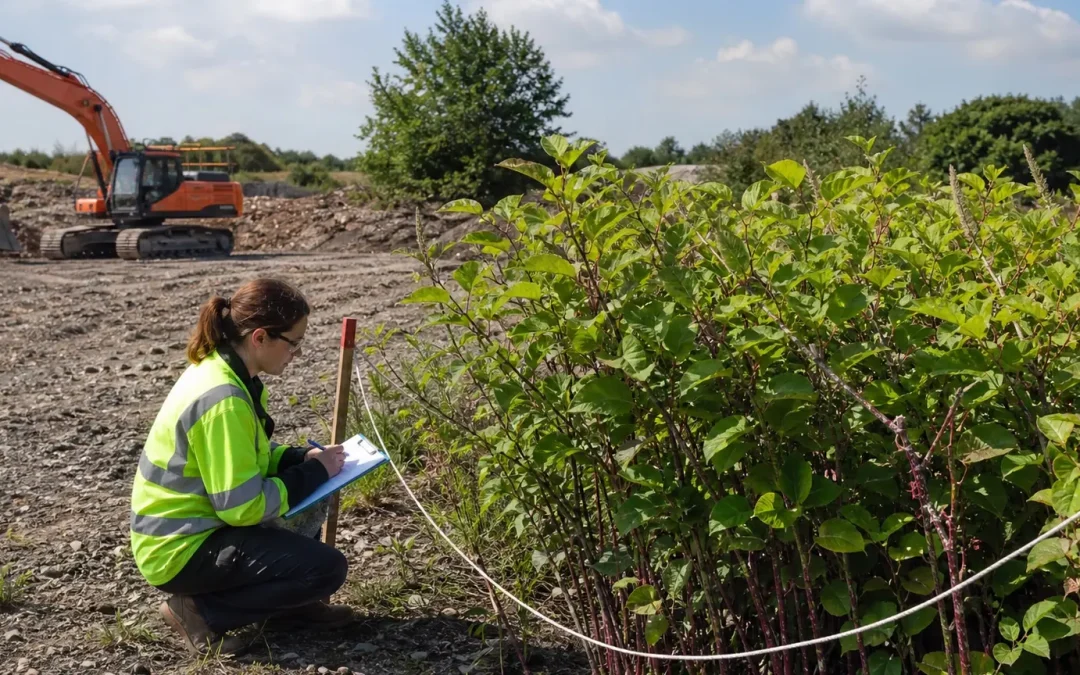
Site clearance creates momentum. Machines arrive, vegetation is reduced and the development footprint begins to take shape. If invasive non-native species are present, however, starting disturbance before their extent is understood can move viable plant material into clean ground, stockpiles, haul routes and neighbouring land.
A pre-works survey is not simply an ecological formality. It can help the project team define exclusion zones, select a remediation method, estimate waste and programme the work in the correct sequence.
The cost risk often sits below ground
Japanese knotweed is the most familiar example because its rhizomes can survive below the visible stand. Surface clearance alone does not define the affected soil. Excavation, grading, trenching, service installation and vehicle movement may all redistribute material if controls are not in place.
Other invasive plants create different risks. Some spread through seeds, some through roots or fragments, and giant hogweed also presents a serious health hazard because its sap can cause severe skin reactions in sunlight. Species identification must therefore come before a generic clearance instruction.
What the survey should give the project team
A useful commercial output should be practical enough to brief designers, site managers and contractors. Depending on the site, it may include:
- mapped stands and areas requiring further investigation;
- species and confidence of identification;
- a clearly defined working or exclusion zone;
- photographs and permanent reference points;
- an assessment of likely soil and waste implications;
- remediation options aligned with the proposed construction sequence;
- biosecurity controls for people, tools, vehicles and stockpiles;
- monitoring and reporting requirements; and
- responsibilities when the design or ground conditions change.
The plan should be available to the people doing the work, not left in a tender appendix that never reaches the machine operator.
Programme the remediation around the land use
The most suitable method depends on the development programme and the future use of the affected area. A multi-season treatment programme may be appropriate where the ground can remain undisturbed. Where construction must proceed, managed excavation, on-site treatment or off-site disposal may be considered, subject to access, space, permissions and waste rules.
In England, Japanese knotweed material and affected soil become controlled waste when discarded. RPS 178 is an Environment Agency enforcement position for specified on-site treatment, burial and reuse activities; it is not a permit and does not remove the underlying legal requirement for one. An operator relying on it must meet every condition, including having a management plan and retaining records. Different regulators and rules apply in Wales, Scotland and Northern Ireland.
Five controls to agree before machines move
- A named lead: one person owns the invasive-plant controls and change process.
- A visible plan: site drawings and physical markers agree with each other.
- A movement rule: contaminated soil, vegetation and equipment do not leave the controlled area without authorisation.
- A cleaning method: boots, tracks, buckets and tools are inspected and cleaned in a defined area.
- An evidence trail: photographs, waste documents, treatment records and monitoring results are retained with the site file.
These controls reduce reliance on memory and help new subcontractors understand the constraint when teams change.
From survey to construction-ready ground
Elcot Environmental can manage the process from invasive-plant survey and management plan through remediation, waste handling, site clearance and monitoring. Its public service describes full site clearance and site set-up, followed by handing the site over ready for infrastructure and construction. The precise scope, permissions, exclusions and completion evidence are agreed site by site. Elcot also covers other invasive plants where the species and site require a different plan.
If a site is approaching clearance or earthworks, early information allows the remediation strategy to be priced and sequenced before it becomes an emergency instruction.
Call 01793 700100 to discuss a commercial site in England or Scotland, 01792 930199 for Wales, or send the site details online.
Recent Comments