The words “Japanese knotweed” in a survey can make a property purchase feel as though it has stopped. In practice, the next step is to replace uncertainty with clear information. The presence of knotweed does not create one automatic lending, value or treatment outcome. The location, extent, impact, management history and proposed use of the land all matter.
RICS moved away from its former distance-only approach and now asks valuers to consider the effect of the infestation on the property’s use and enjoyment. Buyers still need professional advice, but the discussion should be evidence-based rather than driven by an old rule of thumb.
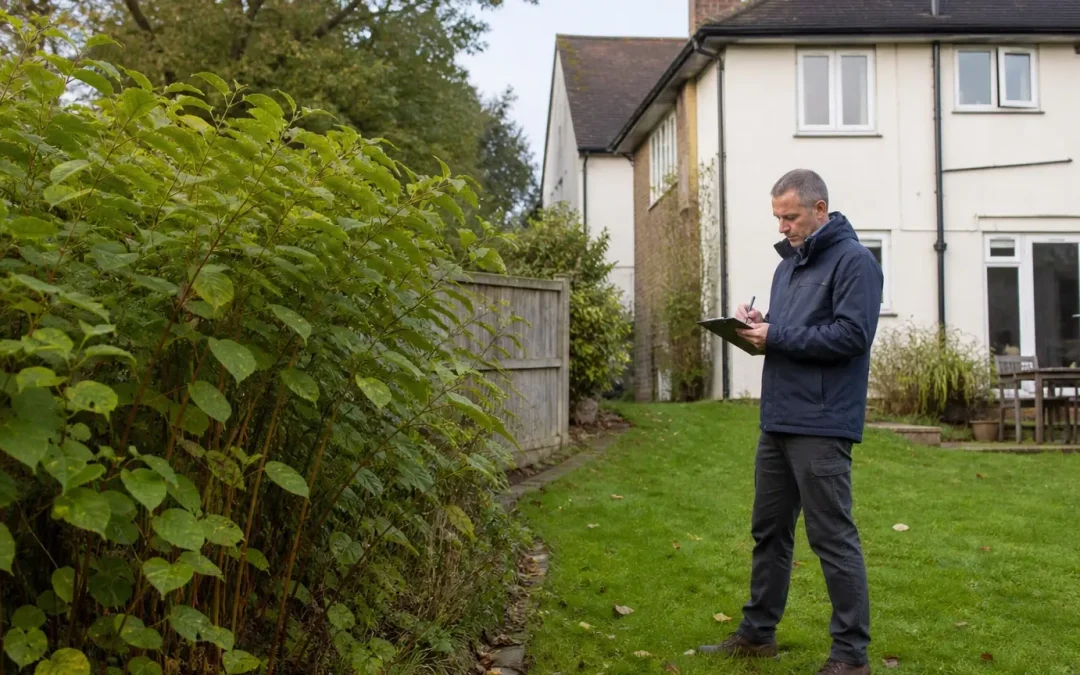
Start with identification and a site plan
A useful file should establish that the plant has been identified by a competent person and show where it is growing. Ask for:
- dated photographs and the survey date;
- a plan showing the visible stand and relevant property features;
- notes on growth outside the boundary, where observable;
- the proposed treatment or removal area;
- the reason the chosen method suits the property; and
- any limitations, inaccessible areas or assumptions.
If the report relies on a winter inspection, ask what evidence supported the identification and whether a growing-season visit is recommended.
Understand the treatment programme
A management plan should say more than “spray for several years” or “remove knotweed”. It should identify the treatment objective, likely timescale, visit or monitoring arrangements and what the owner must avoid doing.
Questions worth asking include:
- Who is responsible for each visit and report?
- What happens if growth appears outside the mapped area?
- Are building, landscaping or drainage works restricted during the programme?
- What records will be provided when treatment is complete?
- How will the plan transfer to a new owner?
Treatment completion and monitoring may be separate stages. The paperwork should make that clear.
Read the guarantee rather than relying on its name
An insurance-backed guarantee can be important to a buyer or lender, but it should be checked like any other contract. Confirm:
- the company and insurer involved;
- the property and treatment area covered;
- the start and end dates;
- what counts as a valid claim;
- owner responsibilities and exclusions;
- transfer arrangements; and
- what happens if the original contractor ceases trading.
Do not assume that “insurance-backed” means every event is covered or that every lender will take the same view. Your solicitor, surveyor and lender should assess the documents relevant to your purchase.
Keep disclosure accurate and measured
Property forms and legal requirements change, and the position differs across the UK. Sellers and buyers should answer enquiries honestly and obtain current conveyancing advice. A treatment contractor can provide plant and management evidence but should not replace the solicitor or valuer.
Avoid minimising a confirmed issue, but also avoid unsupported claims that knotweed inevitably damages a building or makes a property unmortgageable. The RICS standard promotes a more proportionate assessment of actual impact.
How Elcot can support the property file
Elcot Environmental provides professional identification, surveys and mortgage-purpose risk reporting. For confirmed Japanese knotweed, Elcot can provide its mortgage-approved treatment route with a 10-year insurance-backed guarantee where appropriate. The guarantee applies to the agreed knotweed package; your lender, valuer and solicitor should still confirm their own requirements and review the actual documents. Elcot also explains common concerns on its Japanese knotweed myths page.
If a survey has raised a concern, send Elcot the report, photographs, site plan and any historic treatment records through the contact form. This allows the first conversation to focus on the evidence available and any information still needed.
For England or Scotland, call 01793 700100. For Wales, call 01792 930199.
Recent Comments